(4. min. read)
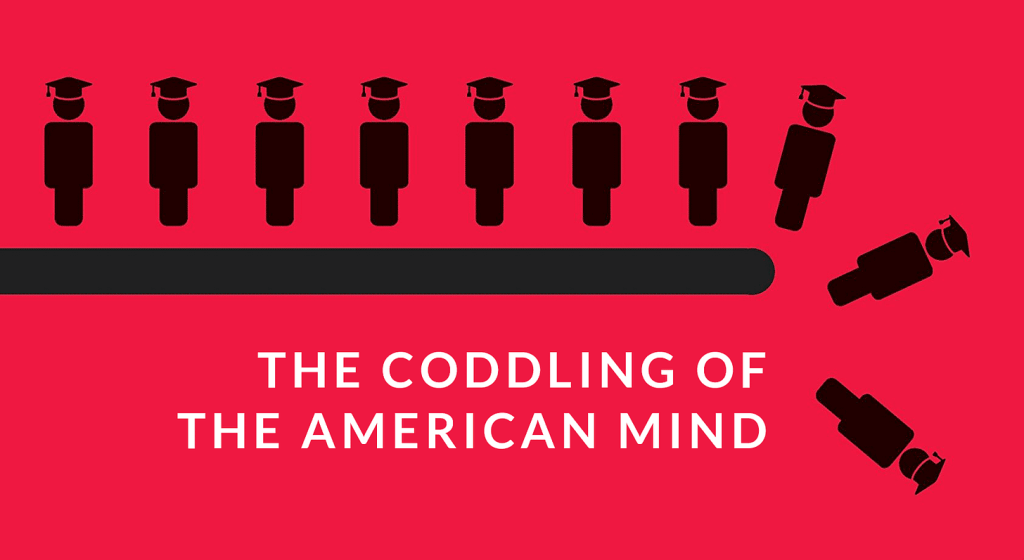
The Coddling of the American Mind: How Good Intentions and Bad Ideas Are Setting Up a Generation for Failure is an engaging and thoughtfully critical book authored by Greg Lukianoff and Jonathan Haidt. Released in 2018, this work scrutinizes the prevailing cultural ethos within American higher education institutions and its repercussions on students’ psychological well-being, resilience, and comprehension of free speech. Leveraging extensive psychological research, the authors present a case that current practices within educational and societal frameworks are, albeit unintentionally, predisposing young adults to heightened susceptibility to mental health challenges.
Overview
Lukianoff and Haidt pinpoint three principal “Great Untruths” that they assert are being embedded into young minds by well-intentioned yet overly protective parents, educators, and societal standards:
1. The Untruth of Fragility: Suggesting that adversity weakens rather than strengthens individuals.
2. The Untruth of Emotional Reasoning: Advocating for an unquestioning trust in one’s immediate emotions.
3. The Untruth of Us Versus Them: Propagating the notion that life is a binary conflict between good and evil factions.
The authors contend that adherence to these beliefs fosters a “safetyism” culture, which prioritizes shielding individuals from emotional discomfort above fostering open discourse and resilience. According to Lukianoff and Haidt, this paradigm is counterproductive to the psychological growth of students and is linked to the surge in mental health issues among the youth.
Effects on Free Speech and Academic Freedom
The book extensively explores how these misconceptions detrimentally affect free speech and academic freedom within university contexts. The authors articulate that the zeal to safeguard students from potentially offensive or challenging content is culminating in the suppression of free debate and the marginalization of contrary viewpoints. They argue this trend contradicts the essence of tertiary education, which is to acquaint students with diverse perspectives and nurture their critical thinking faculties.
Mental Health and Resilience
Further, Lukianoff and Haidt examine the ramifications of these fallacies on student mental health. They posit that indoctrinating young individuals with a sense of fragility and an overreliance on emotional responses curtails their ability to withstand life’s adversities. This compromised resilience, they argue, plays a part in the escalating incidence of mental health concerns among college students.
Final Thoughts
The Coddling of the American Mind has cemented its place as a significant and much-discussed publication. By probing into the contemporary societal trends and their impacts on the developmental, mental health, and free speech understanding of the younger demographic, the book invites readers to reevaluate the equilibrium between safeguarding sensitivities and fostering resilience. Regardless of one’s stance on Lukianoff and Haidt’s findings, their work undoubtedly ignites crucial dialogues on how to adequately equip the forthcoming generation to navigate the complexities of today’s world.
 Ashton Nichols
Leave a comment